

1. Aerospace & Aviation
The core advantage here is achieving high counterweight efficiency in a small volume, which is critical for optimizing the weight balance and stability of aerospace equipment.
Dynamic balancing components: Used for balancing rotors of aircraft engines, helicopter rotor systems, and gas turbines. Their high density ensures minimal volume while providing sufficient counterweight, reducing overall equipment weight and improving operation stability.
Inertial navigation systems: As counterweights for gyroscopes and accelerometers in inertial navigation platforms. The high density helps maintain the precision of navigation systems under extreme conditions such as high speed and vibration.
Spacecraft components: Counterweights for satellite attitude control systems, and radiation shielding for spacecraft nuclear power units to resist cosmic ray radiation.
2. Defense & Military
High-density tungsten alloys are an environmentally friendly alternative to depleted uranium, with excellent penetration performance and no radioactivity.
Armor-piercing ammunition: Used as the core of armor-piercing projectiles (small-caliber rifle bullets, large-caliber tank shells). The high density and hardness enable the projectiles to obtain strong kinetic energy, effectively penetrating light and heavy armored targets.
Fragmentation warheads: As prefabricated fragments in missiles and bombs. The high density of tungsten alloy fragments ensures longer flight range and higher destructive power compared to steel fragments.
Military radiation shielding: Shielding components for nuclear detection equipment, portable radiation detectors, and military nuclear facilities to block gamma and X-ray radiation.
3. Medical Industry
Their non-toxicity and excellent radiation attenuation ability make them ideal substitutes for lead shielding, complying with strict medical environmental standards.
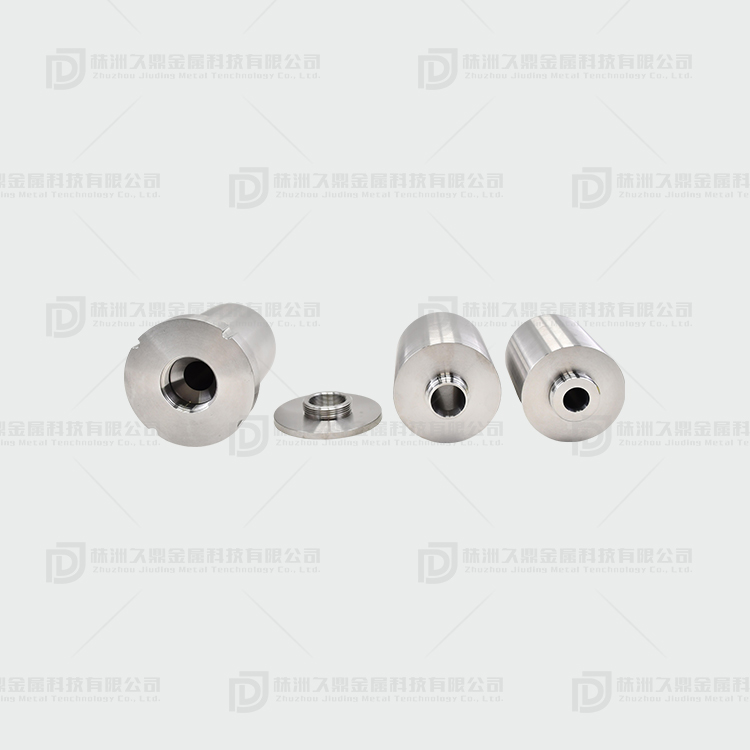
Radiation shielding devices
Shielding for radiotherapy equipment (linear accelerators, cobalt-60 therapy machines) and diagnostic equipment (CT scanners, X-ray machines) to prevent radiation leakage and protect medical staff and patients.
Containers and syringes for storing and transporting radioactive drugs (e.g., iodine-131, technetium-99m) in nuclear medicine departments.
Medical instrument components: High-precision counterweights for medical centrifuges, ensuring stable high-speed operation and accurate separation of blood components or biological samples.
4. Industrial Field
Leveraging their high density, wear resistance, and stability, they are used in various high-demand industrial processes.
Balancing & counterweight components: Counterweights for high-speed industrial equipment such as centrifuges, grinding machines, printing presses, and turbochargers, which reduce vibration and improve equipment service life.
Wear-resistant parts: Valve balls for high-pressure hydraulic systems and petroleum pipelines, and rolling elements for high-load precision bearings. They have better wear resistance than steel and can withstand harsh working environments (high pressure, corrosion).
Non-destructive testing (NDT): Shielding for industrial X-ray and gamma ray flaw detectors, which are used to inspect the internal structure of metal parts (e.g., aircraft components, pipeline welds) and protect operators from radiation.
Grinding media: High-hardness tungsten alloy balls for ball mills, used in grinding hard materials such as minerals, ceramics, and high-purity powders. Their high density improves grinding efficiency and reduces wear loss of the grinding medium itself.
5. Civil & Sports Products
Their high density and premium texture make them popular in high-end consumer goods and sports equipment.
Jewelry: Tungsten alloy rings, necklaces, and bracelets. They have a mirror-like luster similar to platinum, excellent scratch resistance (hardness up to HRC 88–92), and are low-maintenance (no oxidation or tarnishing).
Sports equipment
Darts: Weight cores of professional darts. The high density allows precise weight control in a small volume, improving throwing accuracy and stability.
Golf clubs: Counterweights in club heads to optimize the center of gravity, enhancing hitting distance and accuracy.
Fishing gear: Counterweights for fishing sinkers, which sink quickly in water and are corrosion-resistant in seawater.
6. Nuclear Industry
High-density tungsten alloys are key materials for nuclear energy and nuclear research due to their radiation resistance and neutron absorption ability (after doping with boron or gadolinium).
Nuclear power plants: Shielding for reactor cores, spent fuel storage tanks, and nuclear waste transport containers to block gamma and neutron radiation.
Nuclear research: Shielding components for particle accelerators, nuclear physics experiment devices, and radioactive material laboratories.