

Core Characteristics for Radiation Shielding
Ultra-high density
The density of tungsten alloy is 15.8–18.75 g/cm³, which is much higher than traditional shielding materials like lead (11.34 g/cm³) and steel (7.85 g/cm³). Higher density means stronger radiation attenuation ability: a thinner tungsten alloy shield can achieve the same shielding effect as a thicker lead shield, reducing the volume and weight of shielding devices significantly.
Environmental friendliness
Unlike lead, tungsten alloy is non-toxic and does not produce harmful heavy metal pollution during production, use, or disposal. It is recognized as an environmentally friendly alternative to lead shielding, complying with strict environmental regulations in many countries.
Good mechanical properties
Tungsten alloys have high hardness, tensile strength, and corrosion resistance, which allow them to be processed into complex shapes (e.g., plates, blocks, cylinders, custom components) and maintain structural stability in harsh environments (high temperature, high pressure, chemical corrosion).
Excellent radiation attenuation efficiency
Tungsten has a high atomic number (Z=74), which enables it to effectively scatter and absorb high-energy photons through photoelectric effect, Compton scattering, and pair production. For neutron radiation, tungsten alloys can be doped with boron or gadolinium to enhance neutron absorption performance.
Common Application Scenarios
Medical industry
Radiotherapy equipment: Shielding components for linear accelerators, cobalt-60 therapy machines, and proton therapy devices to prevent radiation leakage and protect medical staff and patients.
Diagnostic equipment: Shielding for X-ray machines, CT scanners, and nuclear medicine imaging devices (e.g., PET-CT) to reduce background radiation interference.
Radioactive drug handling: Containers for storing and transporting radioactive isotopes (e.g., iodine-131, technetium-99m) to avoid radiation exposure.
Nuclear industry
Nuclear power plants: Shielding for reactor cores, spent fuel storage tanks, and nuclear waste transport containers to block gamma and neutron radiation.
Nuclear research: Shielding for particle accelerators, nuclear physics experiment devices, and radioactive material laboratories.
Industrial non-destructive testing (NDT)Shielding for industrial X-ray flaw detectors and gamma ray flaw detectors, used in testing the internal structure of metal parts (e.g., aircraft components, pipeline welds) to protect operators from radiation.
Aerospace and defense
Spacecraft components: Shielding for satellite nuclear power systems and space radiation detectors to resist cosmic ray radiation.
Military equipment: Shielding for nuclear weapons and radiation detection devices.
Typical Product Forms
Tungsten alloy shielding is customized according to application needs, including:
Standard products: Shielding plates, shielding blocks, shielding cylinders, and shielding rings.
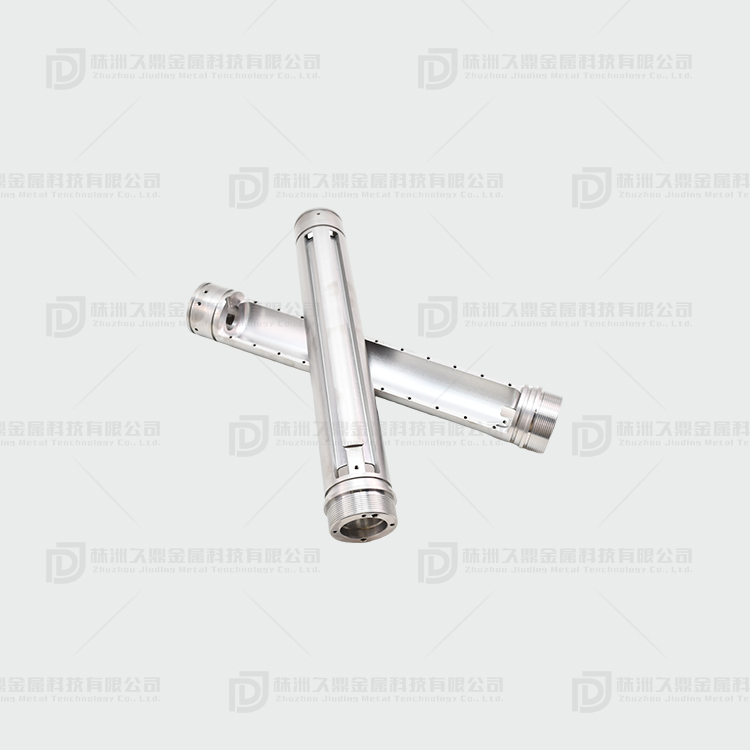
Custom products: Special-shaped shielding parts (e.g., curved shields, hollow shields) processed by cutting, drilling, and grinding.