

|
Comparision dimensions |
Tungsten electrode |
Molybdenum Electrodes |
|
Core Material Properties
|
1. Ultra-high melting point 3422 ℃, the highest among pure metals2. High density (19.3 g/cm³), good rigidity3. Strong arc stability, low vapor pressure at high temperature4. Brittle at room temperature, easy to break when impacted |
1. High melting point 2620℃, lower than tungsten but still excellent2. Moderate density (10.28 g/cm³), lighter than tungsten3. Good ductility at room temperature, easy to process into various shapes4. High thermal conductivity and electrical conductivity, close to copper |
|
Main Types & Modifications |
Often doped with rare earth oxides (e.g., ThO₂, CeO₂, La₂O₃) to improve arc ignition performance and service life, divided into WT20, WC20, WL15 and other grades |
Mostly pure molybdenum or molybdenum alloys (e.g., Mo-La alloy, Mo-Ti alloy) to enhance high-temperature strength and oxidation resistance |
|
Key Application Scenarios |
1.TIG welding(tungsten inertgas welding The most core application, used for welding stainless steel, aluminum alloy, titanium alloy and other precision components2. Plasma cutting/arc spraying: As arc electrodes to generate stable high-temperature plasma arcs3. Semiconductor industry: Used for high-temperature heating electrodes in crystal growth furnaces |
1. Vacuum metallurgy: As heating electrodes in vacuum furnaces, used for smelting high-temperature alloys, rare metals2. Glass manufacturing: Used for electrodes in glass melting furnaces (resistant to glass corrosion)3. Electrochemical industry: Used for electrodes in electrolysis of molten salts, electroplating4. Lighting industry: As support electrodes for incandescent lamp filaments |
|
High-temperature Performance |
Excellent high-temperature stability, can work stably under 2000~3000℃ in inert atmosphere; easy to oxidize in air above 400℃, forming volatile WO₃ |
Good high-temperature strength, but oxidation resistance is worse than tungsten; oxidizes rapidly in air above 600℃, forming MoO₃ which volatilizes easily; needs protection in vacuum or inert gas |
|
Processing Characteristics |
Brittle at room temperature, difficult to process (needs hot forging, wire drawing at high temperature); easy to break during mechanical operation |
Good room-temperature ductility, easy to process into sheets, wires, rods; low processing cost compared with tungsten |
|
Cost & Availability |
Tungsten ore resources are relatively scarce, and the preparation process of doped electrodes is complex, so the cost is higher |
Molybdenum ore resources are more abundant, and the processing technology is mature, so the cost is lower is than tungsten electrodes |
|
Limitations |
1. Poor room-temperature toughness, easy to crack under impact2. High cost limits large-scale application3. Oxidation failure is easy in air at high temperature |
1. Lower melting point than tungsten, cannot be used in ultra-high temperature environments above 2600℃2. Poor oxidation resistance, must be used in protective atmosphere |
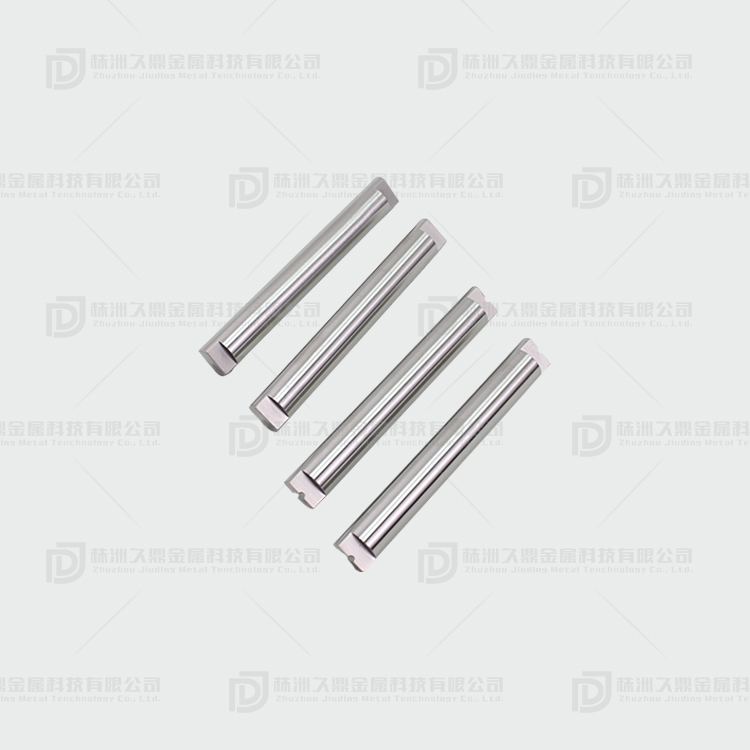
Summary of Core Selection Principles
Choose tungsten electrodes when you need ultra-high temperature resistance, stable arc performance, such as precision TIG welding, plasma arc applications, and semiconductor high-temperature processes.
Choose molybdenum electrodes when you need good processability, low cost, and work in vacuum/inert gas environments below 2600℃, such as vacuum furnace heating, glass melting, and electrochemical electrolysis.